
Knowledge Capture Matters More Than Automation
Your domain experts' frameworks, decision patterns, and judgment calls are more valuable than any automation project. Here's how to capture them before they walk out the door.

Tim Clark
Co-founder · 27 February 2026 · 6 min read
TL;DR
Your most valuable asset isn't a process you can automate. It's the expert knowledge living in specific people's heads. Capture their frameworks and decision patterns before they leave. Knowledge distribution often delivers more value than automation alone.
You have a domain expert. Maybe it’s your emergency response director who’s been in the role for 15 years. Or your most senior lawyer who knows every nuance of contract interpretation. Or your procurement manager who understands supplier relationships across your entire network.
This person has knowledge that’s critical to your organisation. And almost all of it lives in their head.
They’re not leaving tomorrow. But they will eventually. And when they do, 15 years of pattern recognition, judgment calls, and contextual understanding just… walks out the door.
Most organisations think this is inevitable. “That’s why we need to hire and train replacements.”
But there’s something you haven’t considered yet: What if you could capture that knowledge before they leave?
Not all of it. You can’t download 15 years of intuition. But the frameworks? The decision-making patterns? The rules of thumb? The common mistakes to avoid? The client relationships and history that inform decisions?
That’s capturable. And it’s way more valuable than most automation.
Why This Matters More Than You Probably Think
Let me give you a real example. A government agency needed to evaluate tenders. The evaluation was complex: technical capability, cost, track record, financial stability, cultural fit. The decision required judgment.
There was one person, call her Sarah, who was brilliant at it. She’d been doing it for 8 years. She understood the industry, knew the vendors, had a nose for where corners were being cut.
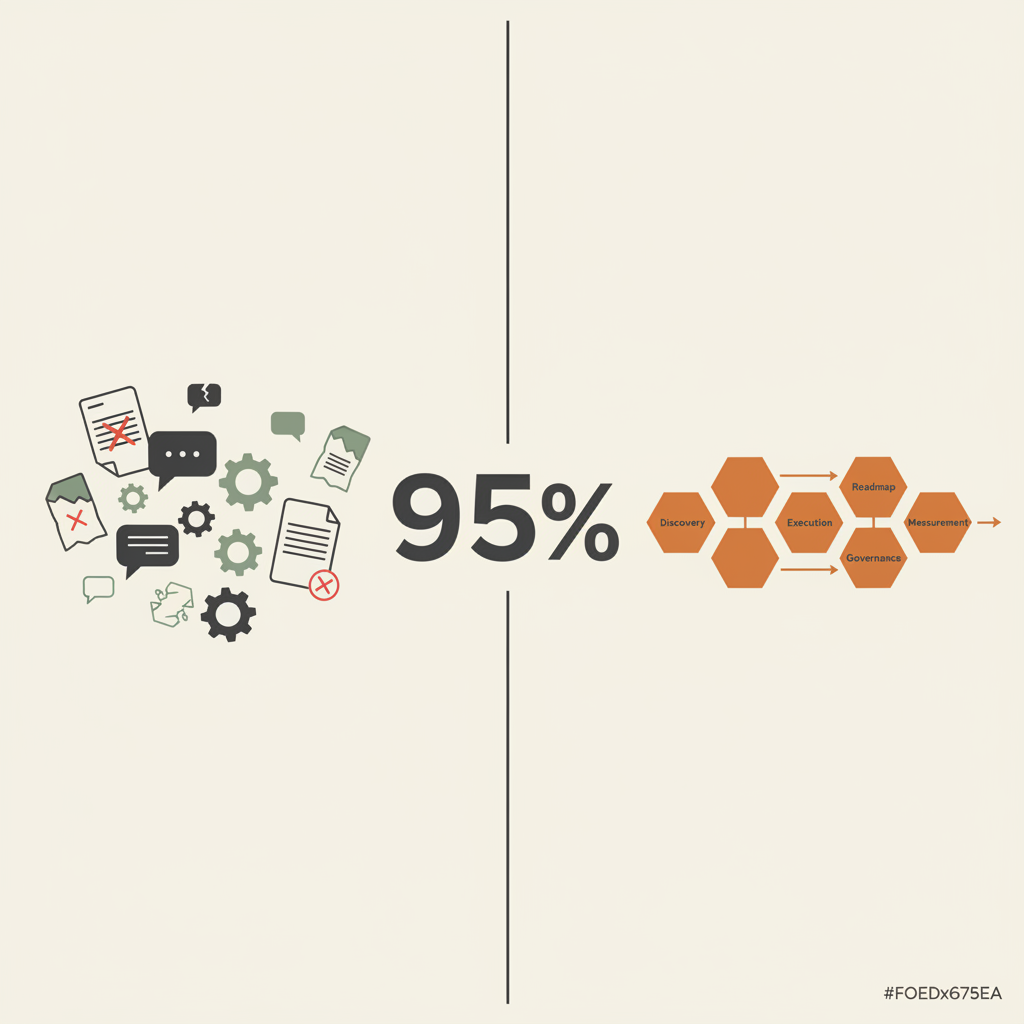
When Sarah evaluated a tender, you got 95% accuracy. People trusted her judgment.
The organisation started thinking: “Can we automate this? Can AI learn Sarah’s rules?”
They built models. They tuned prompts. They got to maybe 70% accuracy. It was helpful, but it wasn’t Sarah.
Then they tried something different. Instead of trying to replace Sarah’s judgment, they tried to distribute it.
They recorded Sarah evaluating tenders (she talked through her reasoning). They extracted the frameworks: What questions matter? What red flags indicate problems? What indicators suggest the vendor is financially stable? What does good cultural fit look like?
They built training material from this. Not a checklist. A framework for thinking.
Then they trained other people using Sarah’s frameworks. Within 3 months, three other people could evaluate tenders at 85% accuracy.
When Sarah eventually retired, the knowledge didn’t walk out the door. It stayed in the organisation. Distributed across three people.
The automation was useful. But the knowledge capture was transformational.
Research from Deloitte found that 42% of enterprise skills and knowledge exist only in individual employees’ minds, with no documentation or formal transfer mechanism. When these people leave, organisations lose an estimated $31.5 billion annually in knowledge-related losses, according to Panopto’s Workplace Knowledge and Productivity Report.
Why Organisations Miss This
Most organisations are obsessed with automation. “How can we do this with less human effort?”
The automation question is valuable. But it’s often the wrong first question.
The first question should be: “What does excellence look like? Who embodies it? How do they think?”
Once you understand that, then you can decide: Do we automate? Do we distribute the knowledge? Do we do both?
Organisations that skip the first question end up with automation that’s technically clever but doesn’t capture the reasoning that made the original process work.
What Knowledge Capture Actually Looks Like
It doesn’t mean recording someone for 40 hours and transcribing it. That’s not scalable.
It means: In the context of your work, as you’re doing it, capture the frameworks and reasoning.
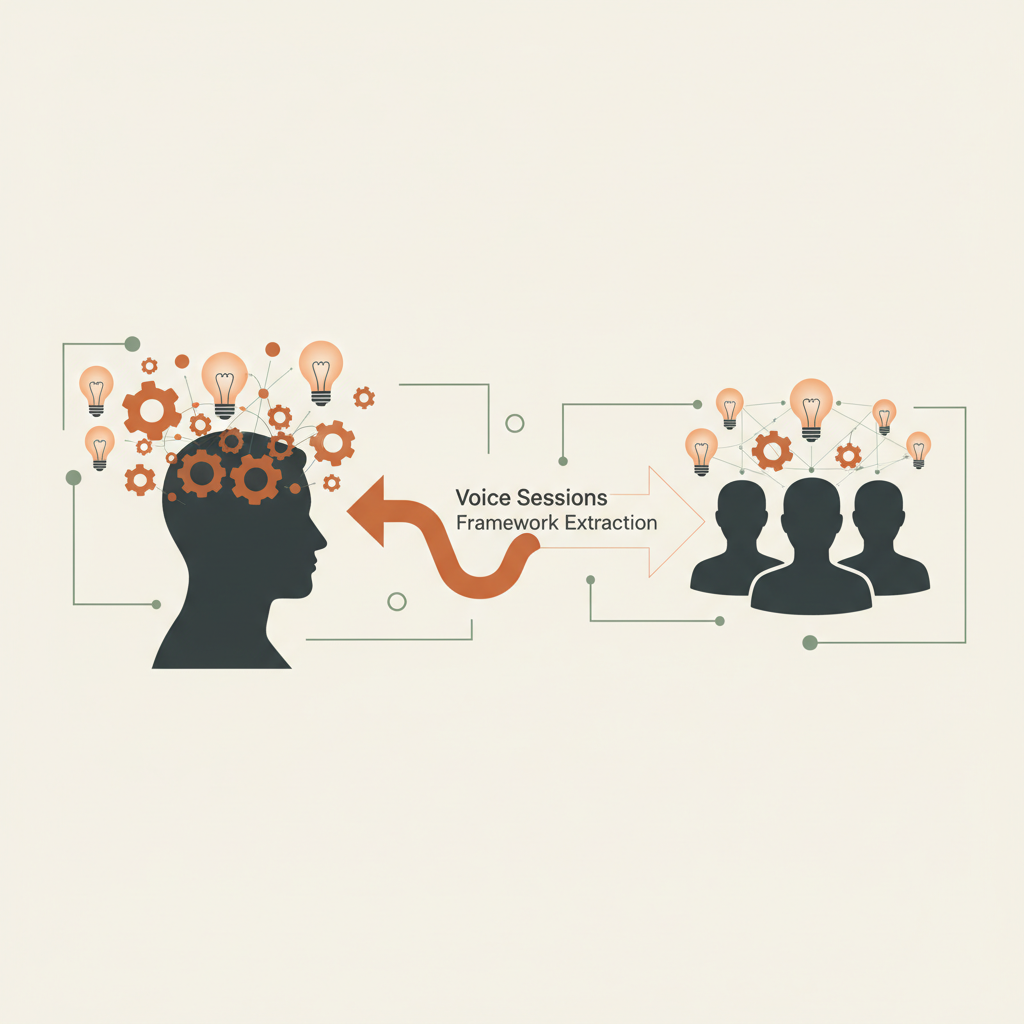
- Voice sessions where your expert talks through a complex decision. The platform captures this, extracts the frameworks.
- Structured interviews that get at the reasoning behind decisions: “When you saw X in the tender, why did that matter?”
- Documentation that happens alongside the work, not after.
This doesn’t take extra time. It happens during the work.
For emergency response: If your director handles a critical incident and talks through the decision-making in real-time, that’s knowledge capture. The platform listens, extracts the frameworks.
For contract review: If your lawyer walks through a contract and narrates their thinking (which they’re probably doing anyway), capture it. Extract the frameworks and concerns.
For procurement: If your procurement manager talks through vendor relationships and red flags, capture it. Extract the decision-making criteria.
All of this is happening already. You’re just usually not capturing it. It’s also why Expert Knowledge Capture is one of our most popular use cases. Organisations realise the value as soon as they see a framework extracted from a single voice session.
The Real Value
Here’s what knowledge capture enables:
Onboarding speed: New team members learn from your expert’s frameworks in weeks, not years. This pairs naturally with New Employee Onboarding Automation for a complete onboarding solution.
Consistency: You get consistent decision-making based on proven patterns, not individual variation.
Scalability: Your expert doesn’t have to do everything. They’ve distributed their frameworks.
Resilience: When people leave, the knowledge stays.
Automation: Once you understand the frameworks, you can automate the routine applications. You’re not replacing judgment. You’re automating the judgments that are already clear.
Confidence: Your leadership knows how decisions are made. You have an audit trail of the thinking.
How the Platform Helps
The AI Native Platform has Voice Sessions specifically for this.
You’re having a critical conversation: leading a decision, handling a complex situation, working through a thorny problem. You record it. The platform listens. It extracts:
- The frameworks you used to think through the problem
- The decision criteria you applied
- The insights and nuances
- The next steps
You get a structured summary of your own thinking. You can share this with your team. You can use it to train others. You can refer to it when similar situations come up.
This is happening automatically. Not slowing you down. Just capturing the thinking that’s already happening.
The result: Your knowledge becomes scalable. Your team can do more. Your experts become multipliers, not bottlenecks.
What This Means for Your Organisation
Think about the critical knowledge that currently lives in specific people’s heads.
For a services firm: Client relationships, vendor capabilities, past project lessons, proposal quality benchmarks.
For government: Policy interpretation, precedent, stakeholder relationships, evaluation frameworks.
For emergency response: Incident decision trees, resource allocation logic, risk assessment frameworks.
For any organisation: Your domain experts’ pattern recognition.
If you could capture that before they leave, what would that be worth?
Not in automation dollars. In resilience, consistency, scalability.
That’s often more valuable than any individual automation project.
Keen to talk about where the critical knowledge lives in your organisation? Get in touch. That’s usually the first place to focus.